

KSeF dla dużych i średnich firm
Kompleksowe wdrożenie i integracja z KSeF nawet w 2 tygodnie
Umów się na spotkanie
Ostatni moment, żeby przygotować firmę do KSeF
Wdrożenie KSeF to nie jest zadanie „na jutro”. Integracje z ERP, mapowanie danych, testy oraz dostosowanie procesów finansowych wymagają czasu — szczególnie w średnich i dużych organizacjach.
Każdy tydzień zwłoki zwiększa ryzyko poślizgów, błędów i chaosu operacyjnego w dniu startu.
Kluczowe terminy KSeF:
-
1 lutego 2026 — obowiązek dla dużych firm.
Sprzedaż powyżej 200 mln zł brutto w 2024 roku. -
1 kwietnia 2026 — obowiązek dla MŚP.
Sprzedaż powyżej 10 tys. zł brutto miesięcznie.
Dowiedz się jak wdrożyć KSeF w 2 tygodnie
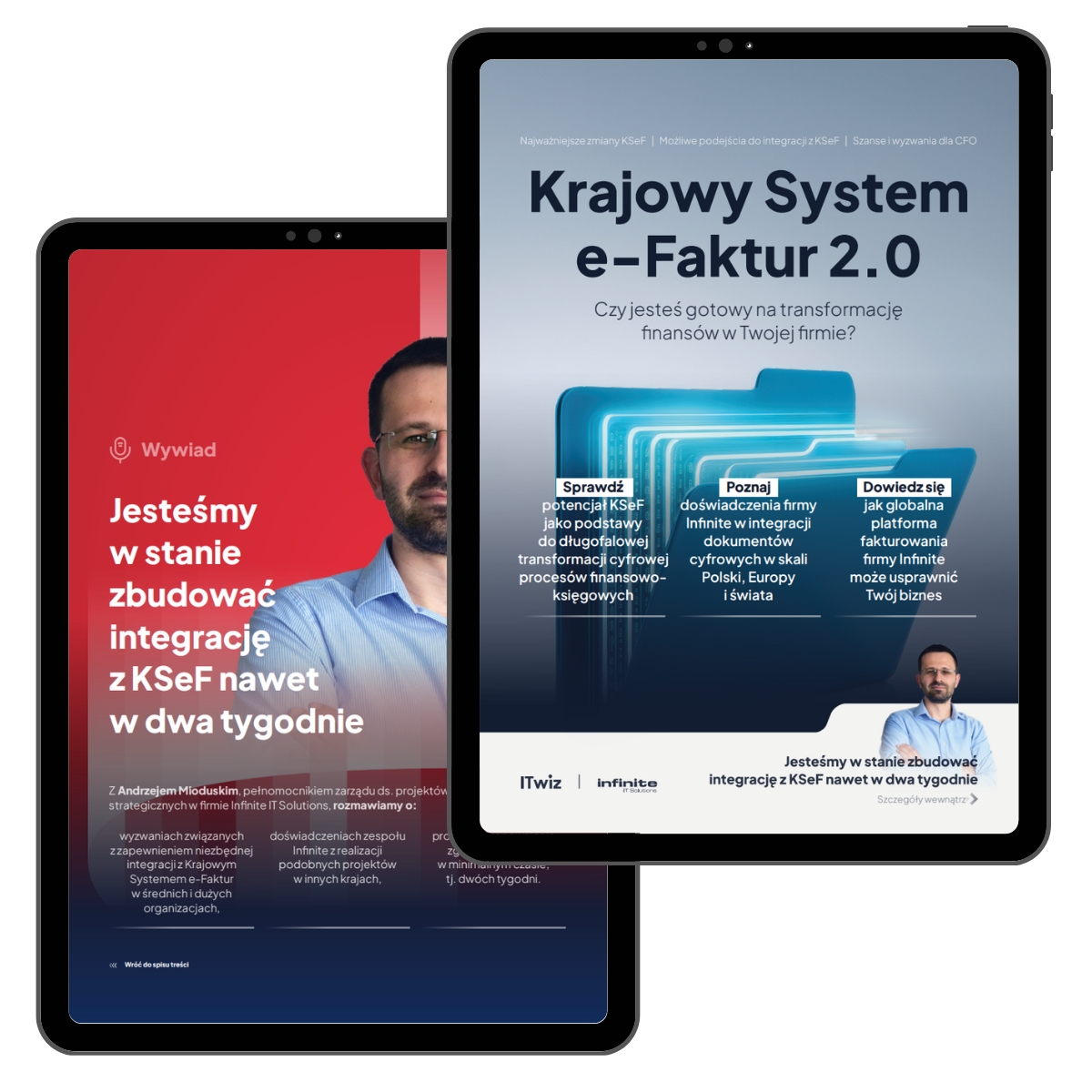
W wielu organizacjach faktury powstają w różnych działach i systemach, procesy nigdy nie były formalnie opisane, a brak jednego standardu utrudnia kontrolę nad danymi. Z naszego raportu o Krajowym Systemie e-Faktur dowiesz się:
- jak krok po kroku połączyć firmę z KSeF nawet w dwa tygodnie,
- poznasz architekturę systemu w przystępny sposób
- dowiesz się o innych systemach e-fakturowaniaw Europie (PEPPOL, NAV, ANAF).
-
Pełna zgodność KSeF z zagranicznymi systemami (np. ZATCA, ANAF, Emaratax)
Platforma dostosowuje się automatycznie do przepisów lokalnych w każdym kraju, zapewniając ciągłość działania.
-
Redukcja kosztów operacyjnych nawet o 25%
Automatyzacja procesów i eliminacja potrzeby lokalnych rozwiązań znacząco obniżają wydatki operacyjne.
-
Skrócenie czasu wdrożenia o 40%
Gotowe integracje i sprawdzony proces wdrożeniowy pozwalają na szybkie uruchomienie platformy bez długotrwałych projektów IT.
-
Eliminacja błędów ludzkich do 90%
Automatyczne przetwarzanie danych zmniejsza ryzyko pomyłek i przyspiesza obieg dokumentów.
-
Gotowość na ekspansję i zmiany w przepisach
Jedna, skalowalna platforma oznacza pełną elastyczność w rozwoju na nowe rynki bez technicznych barier.
Wysyłasz faktury i dokumenty do administracji i partnerów biznesowych w Europie bezpośrednio przez PEPPOL, bez dodatkowych integracji.
Zgodność z unijnymi normami bezpieczeństwa i interoperacyjności (w tym eIDAS i RODO).
Mniej wyjątków, więcej automatyzacji – wszystkie kraje PEPPOL (np. Niemcy, Francja, Skandynawia, kraje Beneluksu) „rozumieją” dokumenty wysyłane tą drogą
Spokój dla CFO i księgowości – bo dokumenty są przesyłane przez zaufany, kontrolowany kanał zgodny z przepisami UE.
Ready for KSeF? We Are.
Don’t let compliance slow you down. Let us handle the complexities of KSeF while you focus on growth.
Frequently Asked Questions (FAQ)
-
Will foreign entities registered for VAT in Poland also be required to issue e-invoices?
Yes. The enacted law does not impose any entity-based restrictions regarding the ability to issue e-invoices. At this time, there is no indication that the obligation to use structured invoices, which has been in place since 2023, will not apply universally.
-
Will all sales invoices need to be issued as e-invoices, or only those for domestic contractors?
Yes. The enacted law does not impose any restrictions in this regard.
-
Will it be possible to send invoices (individually or in bulk) without using the API, via an interface accessible to employees?
So far, the Ministry of Finance has only published documentation on how to communicate with the National e-Invoicing System (KSeF) using an API. This means that taxpayers must have their own software capable of utilizing this API. However, there are plans to launch a KSeF platform for issuing, reviewing, and retrieving invoices, as well as an update to the e-Mikrofirma tool, which will allow users to manually generate e-invoices.
-
Will an invoice issuer be able to download an invoice image from KSeF to print or send it to a contractor via email?
If the recipient has not fully accepted receiving invoices via KSeF, the invoice must be sent through an alternative agreed method, such as email. In this case, it will likely be necessary to send the invoice directly from the issuer's system.
At this stage, there are no detailed technical specifications on how invoice retrieval from KSeF will work. -
How will attachments to invoices, such as energy consumption reports or protocols, be delivered to contractors?
The current structured invoice format does not allow attachments to be included with e-invoices. As a result, any necessary attachments will need to be sent outside the system, based on arrangements with individual contractors.
-
Can the invoice storage period be extended, and if not, how should invoices be stored after 10 years?
No. Structured invoices will be stored in the National e-Invoicing System (KSeF) for 10 years. If legal regulations require a taxpayer to keep invoices beyond this period, they will need to ensure their storage independently.
Additionally, it will remain necessary to guarantee the authenticity of origin, integrity of content, and readability of the invoices.
Opinia eksperta
W cyfryzacji nie chodzi już o wybór – chodzi o tempo i skalę. A dobrze dobrana technologia może z przeszkody uczynić przewagę. Dlatego myśl globalnie już od samego początku. Nawet jeśli dziś działasz tylko na jednym rynku, sytuacja może się szybko zmienić. Przepisy ewoluują, rynki się otwierają – a dobre przygotowanie na starcie pozwala uniknąć chaosu i kosztownych poprawek w przyszłości.

.png?width=360&height=240&name=RO%20webinar%20v2.pptx%20(360%20x%20240%20px).png)